
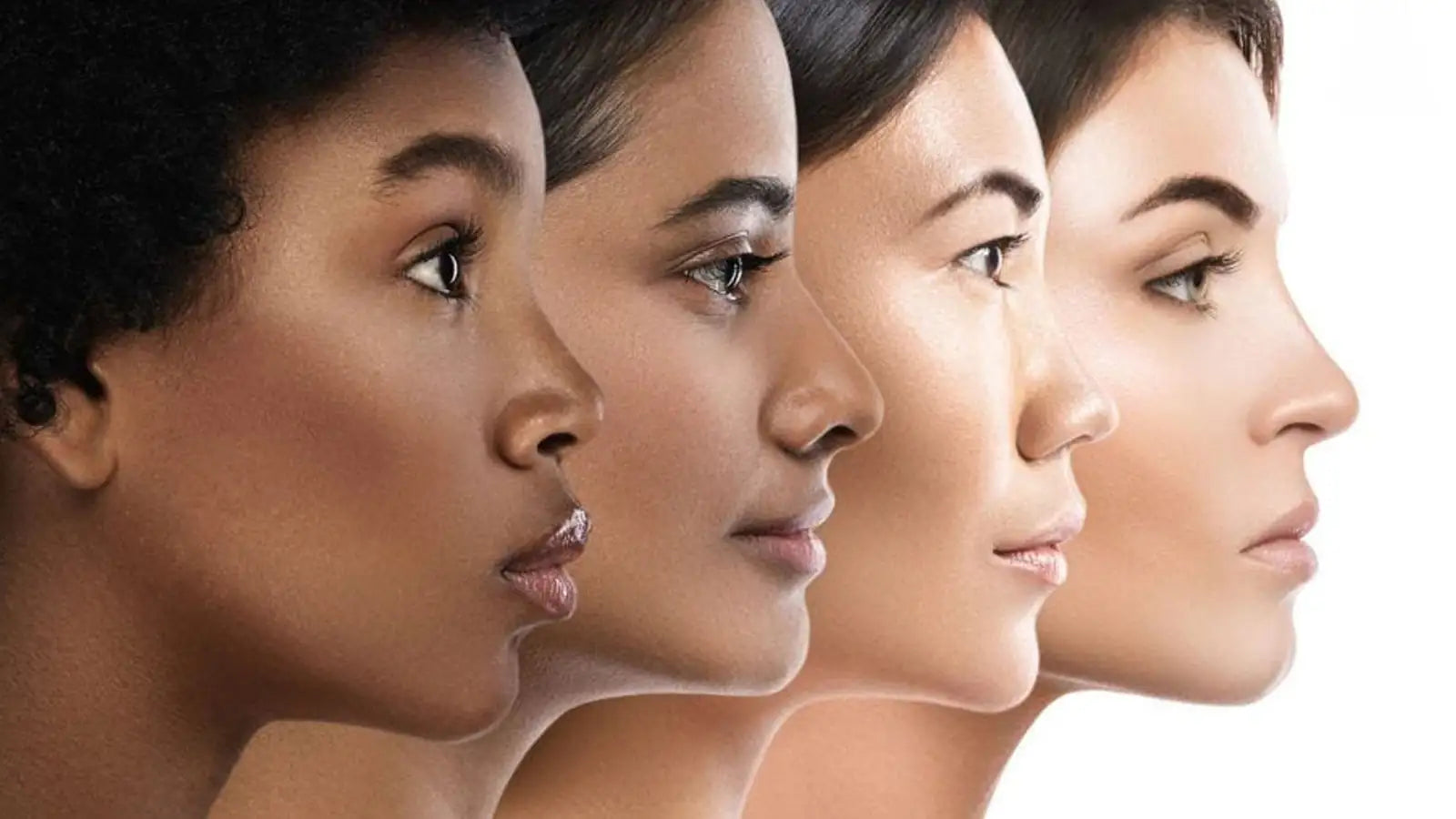
What is my skin type?
There are four skin types:
- peau normale
- dry skin
- oily skin
- combination skin
Skin type is determined by our genes. However, the health of our skin can vary greatly depending on the different internal and external factors it is exposed to.
Normal skin:
Le terme "normal skin" is widely used to describe balanced skin. The scientific term for healthy skin is "eudermic".
Dry skin:
Le terme "dry skin" is used to describe skin types that produce less sebum than normal skin. Due to this lack of sebum, dry skin lacks the lipids necessary to retain moisture and build a protective barrier against external aggressions.
Oily skin:
Le terme "oily skin" is used to describe skin types with increased sebum production. The overproduction is called seborrhea.
Combination skin:
Comme son nom l'indique, la peau mixte représente un mélange de deux types de peau.
Normal skin

Normal skin is balanced: neither too oily nor too dry
What is normal skin?
Le terme "normal skin" is widely used to describe balanced skin. The scientific term for healthy skin is "eudermic".
The T-zone (forehead, chin, and nose) can be a bit oily, but the sebum/hydration balance usually does not change. The skin is neither too oily nor too dry.
Comment to identify normal skin?
A soft, smooth, and velvety texture is the hallmark of beautiful, radiant skin.
Signs of normal skin:
- Has good blood circulation
- A soft, smooth, and velvety texture
- Has a fresh translucent appearance and a uniform moisturizing finish
- Without defects
- Non sensible.
Les personnes having normal skin may see their skin become dry if it is not properly hydrated.
Discover all our treatments for normal skines
Peau sèche

La peau sèche peut sembler tiraillée, rugueuse et terne.
What is dry skin?
Le terme "dry skin" is used to describe skin types that produce less sebum than normal skin. Due to this lack of sebum, dry skin lacks the lipids necessary to retain moisture and build a protective barrier against external aggressions.
This can impair the barrier function. Dry skin (xerosis) appears in many forms and severities. It is sometimes difficult to distinguish them.
Many more women than men have dry skin, and all skin types become drier with age.
Les problèmes liés à la peau sèche sont fréquents : une grande partie de la consultation chez un dermatologue est liée à cela.
Causes of dry skin:
A feeling of tightness and roughness on the skin indicates dry skin.
Les femmes âgées à la peau sèche ont des rides et ridules plus visibles.
The cause is the moisture and sweat contained in the deepest layers of the skin that maintain the skin's hydration.
La peau perd constamment son hydratation à cause de :
- Sweating: Active loss of water from the glands caused by heat, stress, and physical activity.
- La déshydratation : natural dehydration and passive dehydration. The skin releases about half a liter of water daily from the deepest layers of the skin.
La peau sèche est causée par un manque de :
- De natural moisturizing factors (NMF), particularly urea, amino acids, and lactic acid, they help retain moisture.
- De epidermal lipids, such as ceramides, fatty acids, and cholesterol, are necessary for maintaining a healthy skin barrier function.
Therefore, the skin's barrier function can be impaired.
Évaluer différents niveaux de peau sèche
La peau sèche peut être légèrement plus sèche que la peau normale, très sèche ou extrêmement sèche.
Internal and external factors disrupt the skin's ability to hydrate.
La planta de los pies tiende a secarse y agrietarse.
Dry skin:
Slightly dry skin may appear tight, rough, and dull. Its elasticity is also very low.
Very dry skin:
Si la sécheresse n'est pas traitée, la peau peut :
- éprouver une légère desquamation inégale
- Rough and marbled appearance (sometimes due to premature aging)
- produce a sensation of waterproofness
- itch
Elle est également plus sensible aux irritations, aux rougeurs et au risque d'infection.
Extremely dry skin:
Certain parts of the body, especially the hands, feet, elbows, and knees, are prone to:
- For redness
- For chapped skin with a tendency to fissures*
- For calluses
- At peeling
- To the sensations of frequent itching
*Rhagades are cracks or fissures in the skin, usually appearing near an orifice and caused by a disease or vitamin deficiency.
Les personnes âgées et les personnes aux mains gravement déshydratées sont les plus sujettes à avoir une peau extrêmement sèche.
Discover all our treatments for dry skin
Oily skin

La peau grasse brille et ses pores sont visibles.
Qu'est-ce qu'une peau grasse ?
Le terme "oily skin" is used to describe skin types with increased sebum production. The overproduction is called seborrhea.
Causes of oily skin Oily skin is prone to imperfections.
Several factors can trigger excessive sebum production:
- genetic heritage
- hormonal imbalances or changes
- text drug
- depression
- Cosmetics for acne (irritating cosmetics)
How to identify the different types of oily skin?
La peau grasse se caractérise par des pores larges et visibles.
Les problèmes d'acné apparaissent souvent dans la zone T, en particulier pendant la puberté.
La peau grasse se caractérise par :
- Pores clearly visible and enlarged
- aspect shiny
- Pale and thicker skin: blood vessels may be difficult to detect
La peau grasse est sujette à l'acné (points noirs ou blancs) et à diverses formes d'acné.
In mild cases of acne, a large number of pimples appear on the face, but also frequently on the neck, shoulders, back, and chest.
In mild to moderate acne, papules (small bumps without visible white or blackheads) and pustules (medium-sized bumps with visible white or blackheads in the center) appear; the skin then becomes red and inflamed.
Discover all our treatments for oily skin
Combination skin

La variation in skin types on the cheeks and T-zone is characteristic of combination skin.
Qu'est-ce qu'une peau mixte ?
Oily T-zones (forehead, chin, and nose) and dry cheeks are characteristics of so-called combination skin.
Changes in skin type on the cheeks and T-zone are characteristic of combination skin. The surface of the so-called T-zone can vary greatly: it can be narrow or wide.
La peau mixte se caractérise par :
- Zone T oily (forehead, chin, and nose)
- Enlarged pores and possible impurities in the area
- From dry to normal cheeks
Causes of combination skin:
The oily areas of combination skin are due to excessive sebum production. The drier areas of combination skin are caused by a lack of sebum and the resulting lipid deficiency.
Discover all our treatments for combination skin
FAQ Blog – What is my skin type?
-
How can I tell if I have normal skin?
Normal skin is balanced: neither too dry nor too oily. It has a soft, smooth, and velvety texture, with good blood circulation and an even, hydrated finish. -
What natural treatments are there for dry skin?
Dry skin lacks lipids and moisture. Choose creams rich in vegetable oils, natural butters, and hydrosols to restore the skin barrier. -
Comment reconnaître une peau grasse ?
Oily skin produces an excess of sebum, visible through shine on the T-zone, enlarged pores, and a risk of blemishes. -
Quelles sont les causes de la peau mixte ?
La peau mixte combines dry and oily areas, often with a forehead, nose, and chin that are oilier and dry cheeks. -
How to test my skin type at home?
After cleansing your face, observe your skin without applying any cream for an hour: dry, shiny, or balanced areas will indicate your skin type. -
Can skin type change with age?
Yes, skin can change: normal skin can become dry, and sebum production can decrease over time or due to hormones and environmental factors. -
Which natural ingredients should be preferred according to skin type?
-
Peau sèche : shea butter, argan oil
-
Peau grasse : clay, aloe vera
-
Combination skin: light oils and balancing hydrosols
-
Normal skin: gentle oils and light hydration
-
How to protect your skin from external aggressions?
Cleanse your skin with gentle organic soaps, moisturize it regularly, and use appropriate sun protection to prevent dehydration and irritation. -
Where to buy skincare products suited to my skin type?
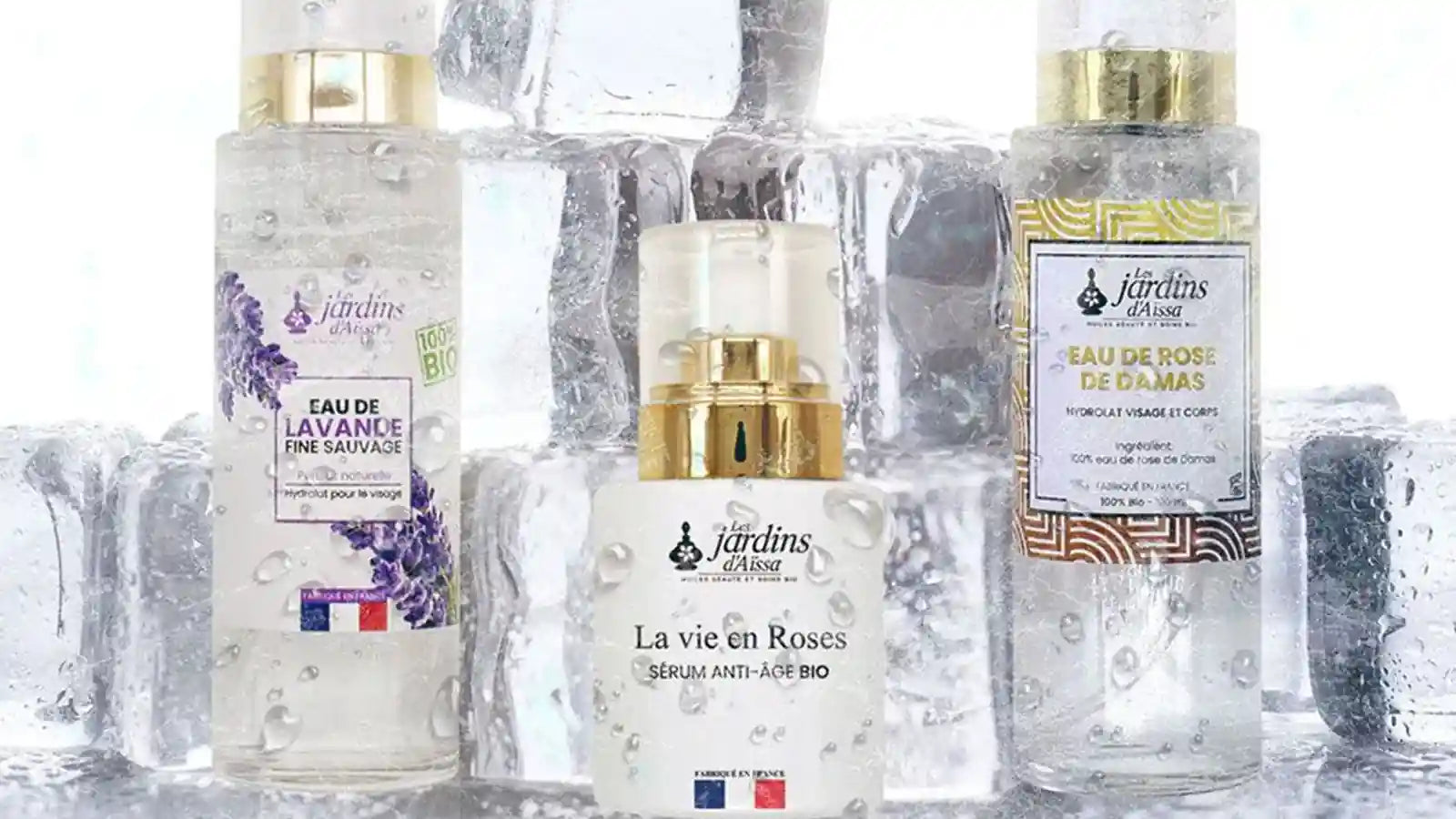
Chez Les Jardins d’Aïssa, find a complete range of natural skincare products for all skin types. Discover the products. -
Are organic skincare products effective for all skin types?
Oui, organic skincare uses natural ingredients suited to each skin type, reducing irritation and imbalances while providing hydration and nourishment.
Date of article update: September 28, 2025

Written by Aissa LJDA

Leave a comment
This site is protected by hCaptcha and the hCaptcha Privacy Policy and Terms of Service apply.