
Origin and traditions of djeka: the journey of a sacred plant from West Africa
Sommaire de l'article
Djeka: origins, history, and traditions of a deeply African plant
When we talk about djeka leaves, we are of course referring to a plant. But we are also talking about a legacy: a tradition passed down from mothers to daughters, a ritual that has carried through generations unchanged. Understanding djeka first means understanding its origins and what it represents for the women who have used it for centuries.
🌱 Origin of djeka leaves: a plant native to African forests
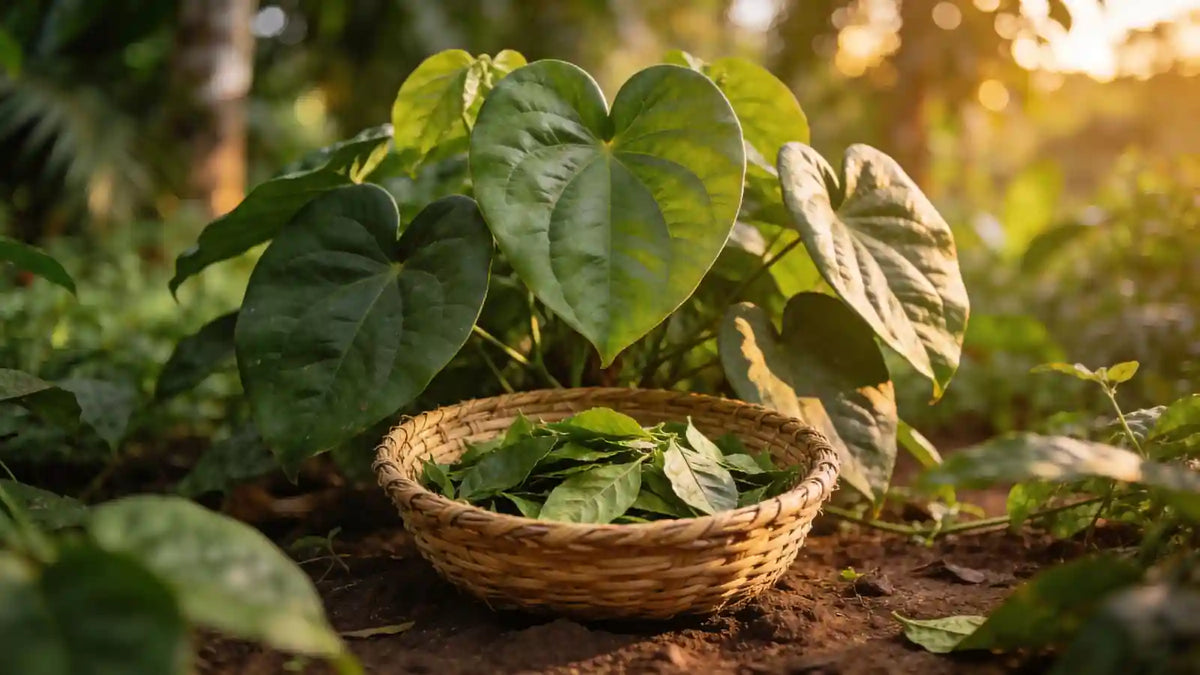
TheAlchornea cordifolia, known as djeka across much of West Africa, is a plant native to the humid tropical regions of the African continent. It is found naturally in gallery forests and wooded edges ranging from Senegal to the Congo Basin.
The plant thrives in rich, well-irrigated soils. It can reach several meters in height in its shrubby form, with large heart-shaped leaves that have slightly serrated edges. It has a fast growth rate, making it an easy-to-grow, abundant plant in its native range.
Depending on the country and language, it goes by different names:
- Djeka in Ivory Coast (the most commonly used name in the French-speaking world)
- Ñiñi in Senegal, in the Wolof language
- Christmas bush in the English-speaking countries of Africa
- Eka in certain communities in Cameroon
This wealth of distinct names on its own demonstrates the pan-African spread of this plant and its cross-cutting cultural significance.
🌱 Djeka in African traditions: a women's secret
If the djeka leaves are so deeply rooted in African culture, it is because it has always held a central place in feminine practices. Traditional African djeka is not limited to a simple herbal remedy: it is an initiatory practice, a code of knowledge transmission, a form of care dedicated to the female body.
In many West African communities — particularly in Côte d'Ivoire, Senegal, Ghana, Benin, and Togo — djeka leaves are traditionally given to young women as they reach adulthood. Mothers, aunts, and grandmothers pass down the related practices, dosages, and rituals.
Djeka and postpartum well-being
One of the most well-documented uses of djeka in African traditions is its role in postnatal rituals. After childbirth, women use djeka decoction for sitz baths and steam baths. This ritual, sometimes referred to as the "40 days" in certain cultures, is considered essential for physical recovery and the return of intimate well-being.
This is not a fringe practice: it is a core, longstanding tradition passed down through generations, that women of the African diaspora brought with them to Europe and North America.
The djeka and intimate freshness
Natural intimate hygiene using djeka is likely the most well-known use of the plant outside of Africa. The concept is simple: prepare a decoction of the leaves, let it cool to lukewarm, and use it for intimate cleansing. This practice is viewed in African cultures as an act of love for your body — a way to care for yourself using only what nature provides, with no chemicals or artificial additives.
At a time when female consumers are seeking to return to natural skincare and move away from conventional products, this ancient practice takes on new meaning. It fits perfectly within the "clean beauty" trend and the growing return to intentional beauty rituals.
🌱 The spread of djeka within the African diaspora
For decades, djeka leaves were only found in African markets or specialty grocery stores in certain large European cities. Demand was strong among the African diaspora in France, Belgium, the Netherlands, and England — communities that had never broken away from this practice.
Gradually, with the rise of online shopping and the growing traction of the "natural beauty" trend on social media, djeka began to reach a much wider audience. Women with no direct ties to Africa discovered this plant through testimonials, videos, and recommendations from friends and family.
Today, djeka leaves have become one of the most sought-after natural wellness products in French-speaking circles.
🌱 Why traceability and origin matter for djeka
With the growing mainstream popularity of djeka, one question has come to the forefront: where do the leaves that people purchase come from? Traceability is a fundamental concern for several reasons.
First, leaves grown under the right climate conditions — in tropical regions, with suitable soil and no chemical inputs — have an aromatic quality and natural richness that makeshift cultivation cannot match.
Next, purity is a very real concern. Leaves treated with pesticides or improperly dried can lose their beneficial properties and contain unwanted residues.
This is why, at the time ofbuy djeka leaves, it is essential to opt for products with known, certified origins. Our leaves are sourced from Senegal, grown according to organic farming standards — a concrete guarantee you receive with every order.
🌱 Djeka today: between tradition and modernity
What makes djeka so fascinating is its ability to span eras without losing any of its relevance. This plant, used in the 18th century in the courts of Akan queens, appears today in the wellness routines of women living in Paris, Lyon, or Brussels.
This enduring legacy is no coincidence. It stems from the plant's versatility, its deep cultural roots, and the fact that the needs it fulfills — freshness, intimate comfort, lightness, relaxation — are universal and timeless.
Djeka is also a symbol of something far broader: the recognition and elevation of African botanical knowledge, which was for too long ignored or downplayed by conventional cosmetics industries. Today, women around the world acknowledge the value of these practices and choose to integrate them into their daily routines.
🌱 FAQ - Questions about the origin and traditions of djeka
In which countries does the djeka grow naturally? TheAlchornea cordifolia It is found throughout the entire African intertropical zone: Senegal, Côte d'Ivoire, Ghana, Benin, Togo, Cameroon, Congo, and many other locations. This is a pan-African plant.
What is the scientific name of the djeka? The scientific name is Alchornea cordifolia, from the Euphorbiaceae family.
Is djeka used differently depending on the country? Yes, even though the basic uses are similar (infusion, intimate bath, steam bath), some local traditions add other herbs or adjust dosages depending on the region.
Is the djeka only reserved for women? Historically, the traditional uses of djeka are primarily associated with women, particularly for intimate hygiene and postnatal care. The drinkable infusion, on the other hand, can be enjoyed by the whole family.
Is djeka cultivation sustainable? TheAlchornea cordifolia is a hardy, fast-growing plant that does not require intensive growing conditions. Responsible or organic farming is perfectly compatible with its cultivation.
🌱 Conclusion
Djeka is not a trend. It is a living heritage, a plant that embodies centuries of African women's traditional expertise. Understanding it within its cultural context means appreciating its true worth and using it with the respect it deserves. You can get even more information by consulting our complete guide to djeka leaves.
Looking to connect with this tradition and enjoy it at home? Browse our organic djeka leaves of Senegalese origin, grown without pesticides. This guarantees preserved authenticity, straight from the tree to your daily routine.

Discover why our customers love it

À lire aussi
How to choose quality djeka leaves: the savvy buyer’s guide
How to choose high-quality djeka leaves? Everything you need to check before buying The market of djeka leaves...
Lire l'article
Djeka leaves, wellness routine and usage precautions
Wellness routine with djeka leaves: the guide to adopting its daily uses Some plants deserve to be at...
Lire l'article
How to use djeka leaves: complete step-by-step tutorial
🌱 How to use djeka leaves? The complete guide You've just received your firstdjeka leavesand you're wondering how...
Lire l'article
Leave a comment