
Moringa powder or baobab powder: which to choose?
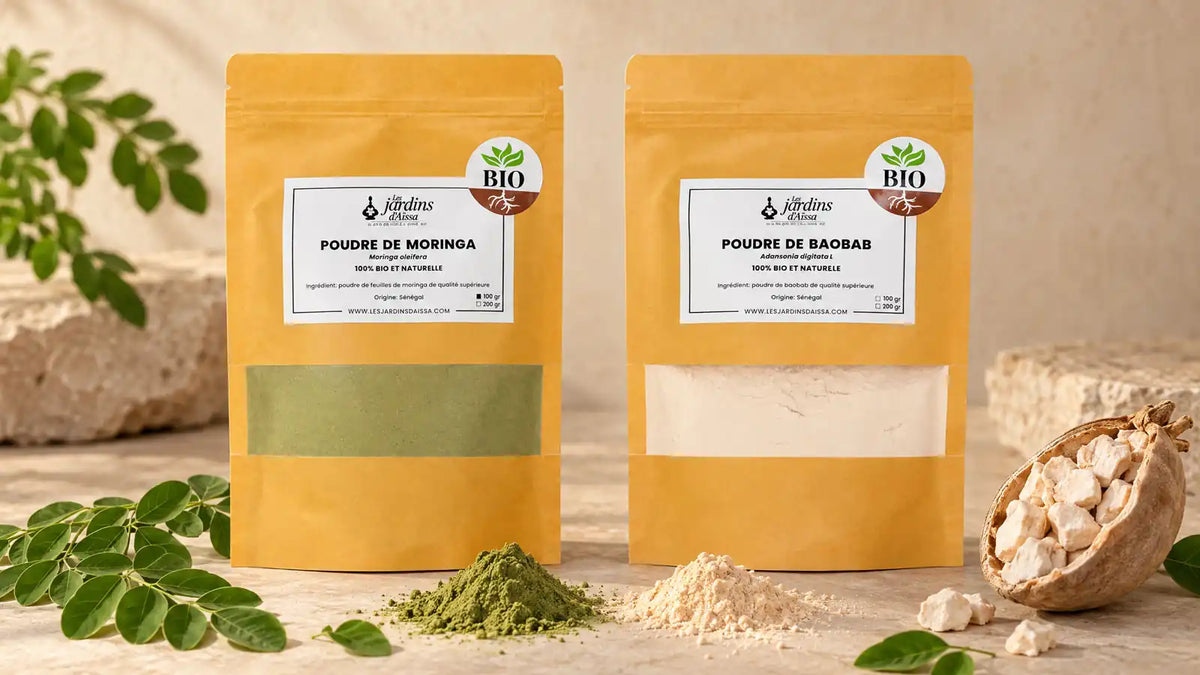
Sommaire de l'article
Moringa powder or baobab powder: which one to choose?
You’re unsure between the moringa powder and the baobab powder? These are two well-known African superfoods, but they don’t have the same composition or uses. The right choice depends on what you’re looking for: daily energy and immunity, or vitamin C and digestion.
In this article, we compare the two powders point by point to help you choose — or understand why using them together can make sense.
Moringa and baobab: two superfoods, two different profiles
The moringa powder is made from the dried and ground leaves of the moringa, an Indian-native tree widely grown in Africa, especially Senegal.
The baobab powder comes from the fruit of the baobab, nicknamed the "tree of life" in Africa, where its pulp has been used for centuries.
Both are 100% organic, natural and from Senegal, but their nutritional composition and uses differ significantly.
Nutritional comparison: moringa vs baobab
| Moringa Powder | Baobab Powder | |
|---|---|---|
| Part used | Leaves | Fruit pulp |
| Nutritional strength | Iron, vitamin A, plant-based proteins | Vitamin C (up to 10x the RDA per tablespoon), fiber |
| Main benefit | Natural energy, immunity | Digestion, immunity, heart health |
| Taste | Earthy, herbaceous | Tangy, slightly lemony |
| Preferred use | Smoothies, juices, savory dishes | Smoothies, yogurts, baked goods |
| Storage | Up to 24 months | 12 to 18 months |
| Format & price | 100g — €12.90 | 100g — €12.90 |
Moringa powder: energy and nutritional richness
The moringa powder is particularly rich in vitamins A, C and E, in minerals (calcium, iron, potassium) and in antioxidants. Its iron and vitamin A content make it an ally for sustained energy, without the spikes associated with artificial stimulants.
It is also a good source of plant-based proteins, which makes it especially popular with athletes and people following a vegetarian diet.
Choose it if you’re looking for:
- A natural energy boost
- A plant-based protein intake
- Immune system support on a daily basis
Baobab powder: vitamin C and digestive comfort
The baobab powder stands out for its exceptional concentration of vitamin C — up to 10 times the recommended daily dose for a single tablespoon — as well as its richness in dietary fiber.
. It also contains calcium, magnesium, potassium and iron, and helps support digestion as well as heart health.
Choose it if you’re looking for:
- A concentrated intake of vitamin C
- Daily digestive support
- A natural tangy touch in your recipes
Can you combine moringa and baobab?
Yes — and it’s even an interesting combination. The two powders have complementary nutritional profiles: moringa provides iron, protein and vitamin A, while baobab provides vitamin C and fiber. You can alternate them according to your current needs, or mix them in the same smoothie to combine their benefits.
How to use them daily?
Moringa powder: 1 teaspoon in a smoothie, juice or infusion.
Baobab powder: 1 to 2 teaspoons diluted in water, juice, smoothie or yogurt. It is also used in baking (muffins, pancakes) to add a natural tangy touch.
📚 FAQ — Moringa or baobab, which to choose?
-
What is the main difference between moringa powder and baobab powder?
Moringa powder comes from the tree’s leaves and is rich in iron, protein and vitamin A. Baobab powder comes from the fruit and is notable for its high vitamin C and fiber content. -
Which to choose for energy?
Moringa powder, thanks to its iron and vitamin A content, is more closely associated with supporting natural energy. -
Which to choose for digestion?
Baobab powder, thanks to its high fiber content, is particularly recommended for digestive comfort. -
Can you consume both powders at the same time?
Yes, they can be combined in the same smoothie or consumed alternately according to your needs. -
What do these two powders taste like?
Moringa has an earthy, herbaceous taste, while baobab has a tangy, lemon-like taste. -
Are these powders suitable for children?
Baobab powder can be added in small amounts to children’s diets. Moringa powder is not recommended for pregnant women. -
Where to buy quality organic moringa and baobab powder?
Directly from Les Jardins d’Aïssa for moringa, and from this page for baobab.
👉 Discover our organic moringa powder and our organic baobab powder on our online store.

À lire aussi
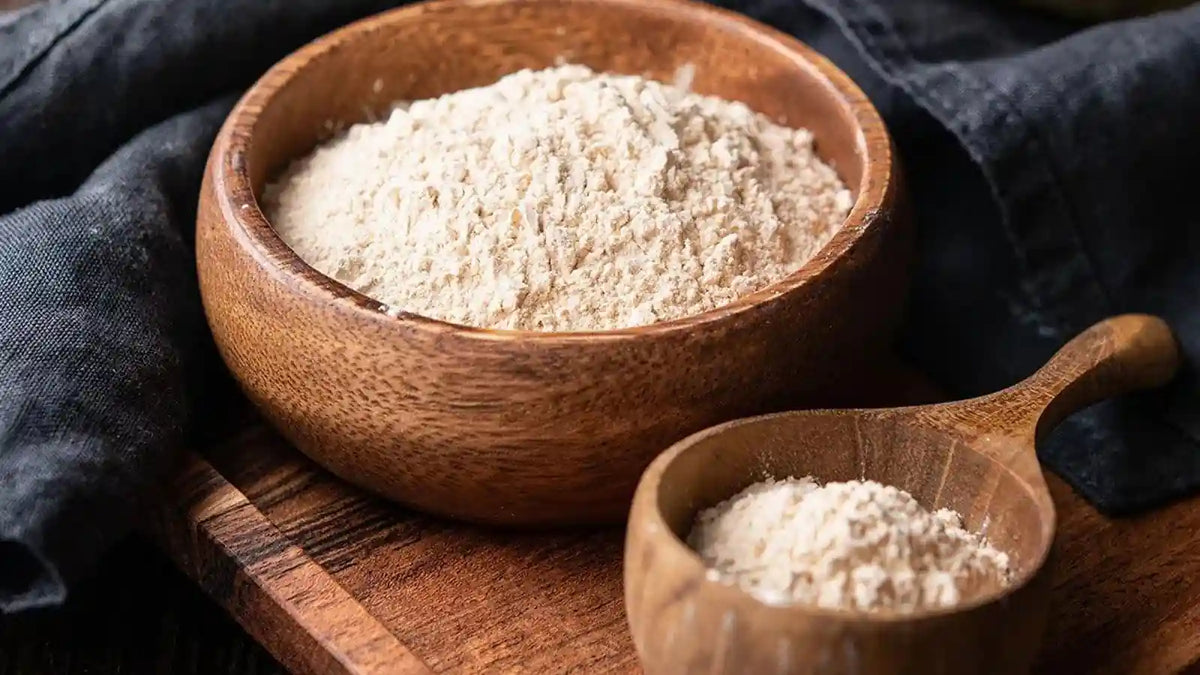
The Benefits of Organic Baobab Powder: A Superfood with Multiple Virtues
The benefits of organic baobab powder Organic baobab powder, extracted from the fruit of Africa's iconic tree, has...
Lire l'article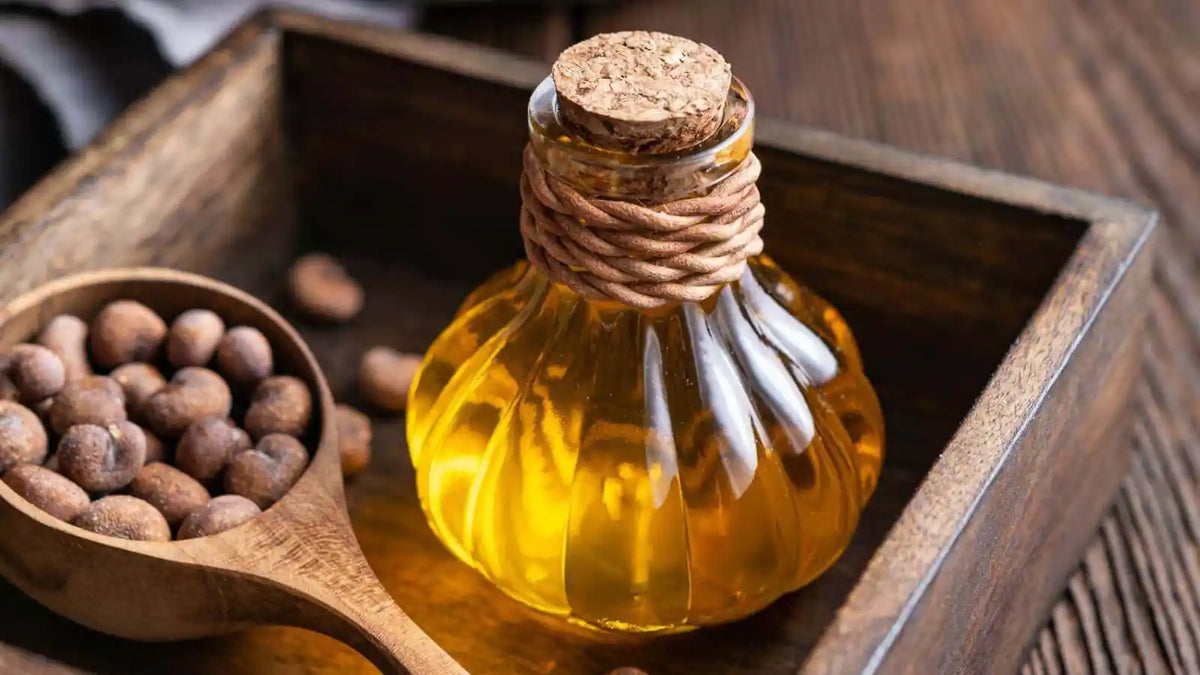
Les bienfaits de l'huile de Baobab bio : un trésor pour la peau et les cheveux
The benefits of organic Baobab oil Theorganic baobab oil, extracted from the seeds of the baobab fruit, is...
Lire l'article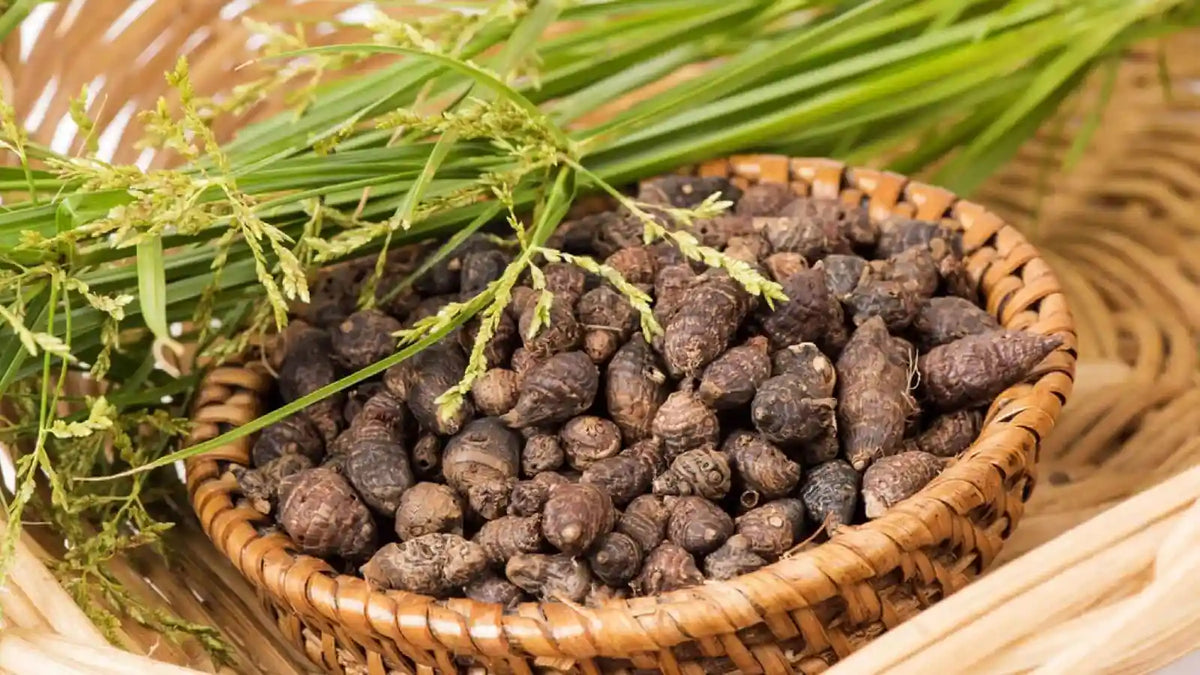
Organic gowé seeds - Boost your energy naturally!
The benefits of Gowé seeds Gowé seeds, also known as Guinea sorrel seeds, are a little-known treasure of...
Lire l'article
Leave a comment